
Success Without Burnout: Caribbean Balance Between Work and Life
MAY - MONEY, MOVES & CELEBRATIONWELLNESSBALANCE
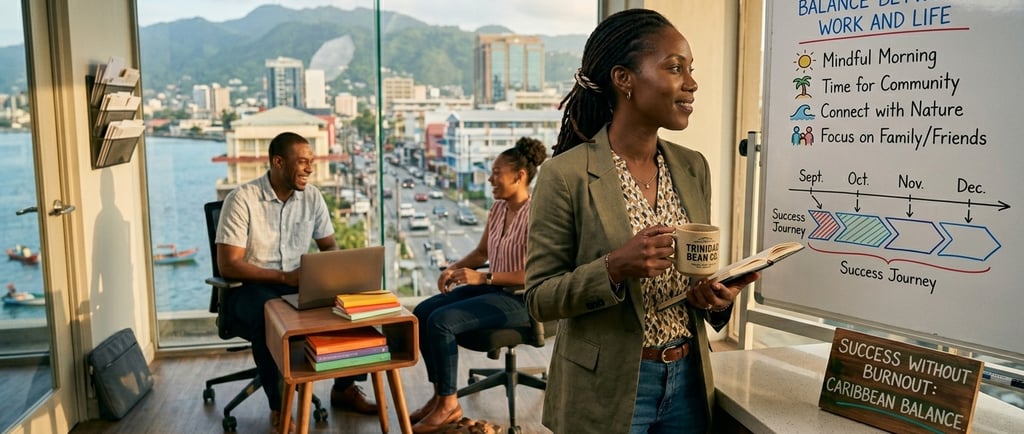

There is a version of success that looks great on the outside and feels terrible on the inside. You've seen it. Maybe you've lived it. The packed schedule, the missed family moments, the weekend that turned into more work, the vacation that never actually happened. All of it in the name of the goal.
Caribbean culture has a complicated relationship with this kind of hustle worship. On one hand, the work ethic is deeply embedded — we've already talked about that. On the other hand, Caribbean culture also understands deeply that life is not just for working. It's for living. And there's a real wisdom in that balance worth reclaiming.
"Work hard enough to provide. Live fully enough to remember why you're providing."
What Burnout Actually Costs
Burnout isn't just tiredness. It's a state where the engine is running but there's no fuel left. Creativity drops. Relationships suffer. Health declines. And ironically, productivity — the very thing you were protecting by working so hard — collapses.
The signs often come quietly at first. You stop enjoying things you used to love. Small tasks feel enormous. You're irritable with the people closest to you. You can't sleep, or you sleep too much. The passion that started the thing starts to feel like a weight.
In Caribbean communities, there's sometimes a cultural stigma around admitting this. Admitting you're struggling can feel like admitting weakness. But exhaustion isn't weakness — it's information. It's your body and mind telling you that something needs to shift.
The Caribbean Model of Balance
Here's something beautiful about traditional Caribbean life: it was structured around natural recovery. Work was hard, yes — but there were also natural rhythms built in. Sundays were sacred. Food brought people together. Music was a release. Community gatherings weren't optional, they were essential.
Those rhythms existed because people understood — even without the language of 'wellness' — that you cannot pour from an empty vessel. Recovery wasn't laziness. It was maintenance.
The challenge for Caribbean people in the diaspora, especially those building businesses or chasing careers in fast-paced cities, is that those rhythms get disrupted. The Sunday reset gets replaced with catch-up work. The family dinner gets replaced with a desk lunch. The music becomes background noise to multitasking instead of a real moment of presence.
Simple Resets That Work
You don't need a week in Negril to reset (though that certainly helps). There are smaller rhythms you can build into your regular life that carry the same spirit.
Protect one meal a day that's actually a meal — not eaten while working, not scrolled through. Just food, presence, maybe some music. Protect one day a week that has at least a few hours with no agenda. Not productivity time dressed up as rest — actual spaciousness. Reconnect with your creative outlets, whether that's cooking, music, sport, or just being around people who energize you.
These aren't luxuries. They're the practices that make the hard work sustainable.
Success Gets to Include Joy
Here's the reframe that might be worth sitting with: success isn't the destination you reach after all the sacrifice. Success includes the journey. It includes how you feel while building. It includes the people you bring along with you. It includes whether you're actually present for the moments you worked so hard to create.
Caribbean culture at its best has always understood this. Celebration is not separate from the work — it's woven into it. The cookout is as important as the contract. The laughter is as valuable as the revenue.
Chase the success. Build the vision. But don't leave joy on the table in the process. You deserve both.
🎙️ Wind Down Wednesday on CariVibez Radio — because your midweek reset matters. Stream live at CariVibez.com
CariVibez Radio · Island rhythm. Real connection.
Contact
Newsletter
© 2020-2026 CariVibez. All rights reserved.


QUICK LINKS
Advertise with Us
Media Kit
Press Kit
Events Calendar